Friday, 5 August 2022

Reminiscences of a Second World War QAIMNS(R) Nursing Sister by Maggie Lane.

This ‘blog’ will relate some the reminiscences and experiences of a Nursing Sister who served in WW2.


This Nursing Sister was my mother, Alice Irene Parkinson, the daughter of a tenant farmer and the village wheelwright living in Bitchfield near Grantham. She left school at twelve years of age, due to family poverty and the death of her father, which precluded any further ongoing education. However, she read enthusiastically to ‘broaden’ her education, in between assisting with the farm, until she was age 21 years, the legal age to start nurse training. She completed her Nurse training at The Radcliffe Infirmary in 1938, and her Midwifery Training at the Simpson Maternity Hospital, Edinburgh.


Her direct accounts and reflections, passed on to me over her lifetime, remain firmly in my memory. Since her death in 1994 I always regret not asking her to expand more on her experiences. Many of her related ‘snippets’ were of course sad, but her clarity in the telling of events was very clear, and elicited several periods of humour during nursing in Algeria and Italy during World War II.

‘Parky’ as she was generally known, had just completed her Midwifery Training in Edinburgh, and joined the Civil Nursing Reserve, prior to enlistment into the QAIMNS(R) at Maidstone Barracks in Kent. Following enlistment and kitting out, a tailor fitted her with an outdoor suit and working dresses. After that it was off to the Queen Victoria Hospital at Netley, Southampton. She told me she didn't do much in the hospital, except attend compulsory security lectures, and often enjoyed tea in the YMCA canteen, which still exists in Victoria Country Park today. 

A group of happy QA’s and TANS(Territorial Army Nursing Service) at Netley Hospital awaiting deployment.

Mother was fortunate and billeted in Netley Village, being very well looked after by a naval captain's widow. She never knew when she would leave,  perhaps never to return, but every day she had to go to the hospital with all her kit ready to move. Suddenly one day, she had ‘a hunch’ that ‘today would be the day’ they would leave. Surely enough, it happened, and the 103(GH) was transported by train from Netley to Avonmouth Docks, no one knowing where they were sailing to, except, probably the captain. She left behind a new dressing gown to show appreciation to the widow for all her kindness and care. The ship that embarked them was the ‘Oranje’, having been used by Queen Wilhelmina of the Netherlands. She said it was quite luxurious! A few dockers waved them off.

The ‘Oranje’, a Dutch Ship converted to a hospital ship

The voyage took them around Northern Ireland then down the Bay of Biscay to Gibraltar, where they were allowed to disembark for a day, enjoying a quick tour of ‘The Rock’, then onwards down the Bay of Biscay. During the voyage Mother recalled a Luftwaffe plane circling low around the ship, whilst she was sitting on deck. No action was directed at the ship and the pilot must have seen the crosses on the sides and funnel, and also women in nursing uniform on deck confirming the status of the ship.

Still no clue was given to their destination, but it was assumed that if the course from Gibraltar was down the South Atlantic, they were likely heading for the Middle or Far East. However, they turned into the Mediterranean, and knew then it would be to North Africa for them! The ship docked in Oran, French Algeria.

Their next move in 1943 from Oran was to a place called Chateaudun in French Algeria. Here was where the tented hospital was erected. All tentage was of the ‘bell tent’ type, with all staff assisting in the construction, as can be seen in these photos taken in Algeria.  Tents and nursing dress were not very practical in comparison to modern Field Hospitals!


The nursing included wounded allied service personnel, German and Italian prisoners. Her recollections were that many of the patients had severe burns to their backs whilst escaping from their burning tanks or vehicles. Sadly, on a very rare occasion an allied soldier would die suddenly from an undiagnosed cause. This upset mother and her colleagues. Perhaps death from shock or infection?

Mother and her colleague were assigned to the POW prison wards, these prisoners having already been segregated into German and Italian prisoners, due to the animosity by the Germans towards the Italians who felt the Italians ‘gave up’ the fight too quickly!

One recollection from this time was of a German prisoner being ‘cheeky’, and asking mother if she was going ‘dancing tonight’, then telling her confidently he would teach her how to dance when they got to London!  On another occasion her colleague was attending to an older German soldier festooned with medal ribbons. Asking him  jokingly ‘are you Herman Goring?’ The whole ward of Germans erupted with uncontrollable laughter. A pleasant memory was that every evening the Germans would all sing beautifully before sleeping.

The battle then moved across to Italy in 1944. Landing at Salerno, once the port was cleared, the 103 GH was moved to a small village named Nochera Inferiore. Mother said it certainly was an apt name for a ‘mucky’ area. Mussolini’s Barracks were commandeered as the hospital, with the nurses ‘housed’ in tents. 

One morning her colleague looked out, and said ‘Good heavens, I think Vesuvius has erupted’. It certainly had, and piles of ash were ‘raining down’ all over the compound. The sisters were issued with wellington boots, and ash was swept into piles. Mother retained these boots for a couple of decades after the war.
Ash from Vesuvius piled high in the hospital compound.


Although Mussolini had cleared the Pontine Marshes of Malarial mosquitos, there was still a risk from insect bites. Hence, slacks and blouses, being issued and worn specifically in the evenings and night time. This was a regulation.

By 1944 the allies were on the offensive moving up through Italy. Already casualties from Monte Cassino were being nursed. A sad reflection witnessed by Mother was that so many captured Germans were only young, and often teenagers, being terrified if an orderly went to help them shave or wash. Such was Nazi propaganda instilled by their regime as to encourage ‘fighting to the death’ rather than surrender,

Her other recollections of Italy outside the hospital were that of abject poverty and near starvation, especially in the Naples area. Armed guards had to put on the lorry convoys to stop supplies being stolen. She well understood the dreadful predicament these people has endured. Another topic not widely discussed in Italy during the war was ‘holding’ the VD patients for treatment in the hospital. This could be difficult for the guards and orderlies as on occasions they had to pursue patients attempting escape from treatments.

On a lighter note, Mother recalled a trip to Capri by Motor Torpedo Boat, where they visited Gracie Fields Villa, now designated for visits by the allies, and a large group audience with Pope Pious X11, in Rome.

The battle then moved north, the hospital closed and staff were redeployed to other Field Hospitals following the battle north. Mother, with others was then returned to England for demob. She later married my father an RAMC Staff Sergeant.


Maggie Lane (Rtd)


Friday, 8 July 2022

Remembering the Queen's Diamond Jubilee Year by Domini Barrett


2012 was a memorable year in many ways. It was not only the Queen’s Diamond Jubilee and London Olympics, but the year my husband and I moved to Hohne, Germany. He was assigned to be the Senior Chaplain of 7th Armoured Brigade. 


On top of all that, in the Autumn I deployed with 243 Field Hospital to Afghanistan on Op HERRICK 17. I was the lead paediatric nurse during a three month period working in the Role 3 hospital in Camp Bastion. It was a busy and challenging tour where I also nursed adults alongside my primary role with children.


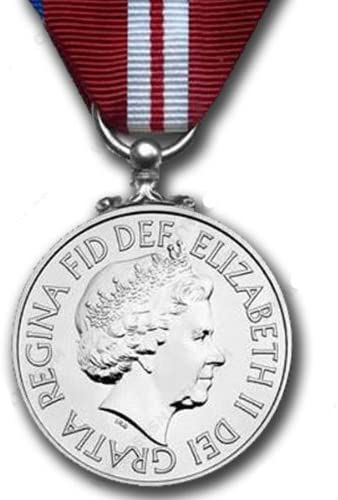
The entire year was highly eventful; settling into a new home and country and then going away for a long period. During the summer we enjoyed a lovely summer holiday exploring parts of southern Germany on a mammoth road trip and marked the Queen’s Diamond Jubilee with parties both in the Garrison in Germany and then with family and friends when we were back in the United Kingdom. However, amongst all this there was no parade or formal presentation of the Queen’s Diamond Jubilee Medal. As I recall the unit’s focus was very much on the build up training (of which there was a great deal) before we went on operations. At this point in my career I had served for nineteen years and so was able to proudly add my new medal to my Golden Jubilee Medal which I had received ten years previously.


As an officer in the Queen Alexandra’s Royal Army Nursing Corps, I have always been conscious that whether at home or overseas I am serving both my Queen and country and so Jubilee milestones marking Her Majesty’s long reign are certainly to be celebrated.


Major Domini Barrett - Senior Nursing Officer - 306 Hospital Support Regiment


Friday, 1 July 2022

A Guest of the Countess of Wessex at the Platinum Jubilee Party by Laud Afam-Adjei|

For the past 70 years, the Queen, Elizabeth II, has reigned as the United Kingdom's sovereign monarch and head of the Commonwealth. As a serving soldier from the Commonwealth, I can attest in a small way to her exemplary leadership, thoughtfulness, and selfless commitment to her role thus far, and I couldn’t be more appreciative. Following the impact of the Corona-virus pandemic, the celebration of the Queen's Platinum Jubilee offered a great opportunity to socialise, come together, and enjoy a typical British bank holiday with somewhat questionable summer weather.

For me, the celebration began on Thursday, June 2nd, when I attended a picnic hosted by the DHE Hybrid Branch of the QARANC association. It was a simple yet entertaining event that saw me jumping on a bouncy castle like a 7-year-old, attempting to compete in a soft play gladiator duel and various other sports such as 'tug of war' and volleyball. The day also provided me with the opportunity to consume beers and eat my weight in cake, scones, and assorted pastries. My team finished third in the tug of war competition, but that didn't stop me from drinking beers late into the evening and dancing around the fire to questionable music.

My celebrations continued in London, where I was honoured to be a guest of the Countess of Wessex, the Colonel in Chief of the Queen Alexander Royal Army Nursing Corps (QARANC), at the Queen's Jubilee party at Buckingham Palace. 


The live experience was incredible; the lights, energy, and atmosphere made me a very proud and an honoured British citizen. With this being my first concert, there were many acts that inspired and entertained me, with the scene of Paddington Bear having afternoon tea with Her Majesty being my favourite of the night. There was a lot of dancing and cheering from me all night. Many memorable and beautiful speeches were read, the majority of which thanked The Queen for her service and included a message from her about protecting the environment for future generations.

My celebration concluded with a peaceful street party in my hometown of Ipswich, where my children and other children in the neighbourhood rode bikes in the street. I laughed with my neighbours and shared cakes again, and our neighbourhood looked alive for the first time in two years, with everyone having a good time.

 
Cpl Laud Afam-Adjei, Student Nurse(ADULT) QARANC

Friday, 24 June 2022

Trooping of the Colour, Platinum Jubilee - By Fiona Thompson


Thursday 2nd June 2022


Two of us, retired QAs, applied for tickets through the ballot being run by the Royal British Legion, for the Trooping of the Colour. We were successful and each took a guest. We knew we would be in for such a treat and I was so excited.

The week before our trip, my neighbour knocked and said her mother (ex WRAC), had told her to come and check I was alright? Slightly bemused, I said “Yes?”. She had heard about the partial collapse of one of the stands and worried that I may have fallen through the floor. Reassuringly I replied that I was going the next week so thankfully I had not ended up being treated by any co-workers.

We joined the queue in Green Park with so many ex-service compatriots. Medals were in abundance and it was such a welcome feeling to be with the military humour and warmth again, having left the Corps in 1992. I wore my first Gulf war medal with pride, along with my metal RBL poppy pin with QA Corps badge attached. We were determined to ensure that we could be recognised by our fellows for the QAs we were. The weather was great and we moved quickly to our seats in the North stand in front of Buckingham Palace.

We watched the troops, bands, vehicles, Royal family, coaches, 200 horses, Irish Wolfhound-Seamus, artillery, 400 musicians, police et al pass in front of us. The colours, sounds, excitement, precision, grandeur, were iconic. The flow of the spectacle moved before us and all around were clapping, cheering and happy comments. The sea of scarlet tunics, shining metal breastplates, bearskins, head dresses, very shiny boots, meticulous marching, shouted commands made me so proud to be part of the British Army. 


The sound of the horses’ hooves seemed reminiscent of a night time podcast you might listen to, to be lulled to sleep. Once the parade arrived in Horse Guards, the large screens set up around the Queen Victoria Memorial gave us front seat pictures (sound followed after 10 minutes!) Truly exciting was the fact that we knew we should see the pageant again on their return to the Palace. The horses were beautiful and fantastic and both of us had ridden Army horses in Germany and Sandhurst, so remembered stories of mounting 19 hand high horses and praying not to fall off. I never did, but had a few hairy moments, including a billy goat at one of the BAOR stables..............


I remembered the bands men and women who had supported us in 33 General Hospital as stretcher bearers while I watched the talented and colourful musicians march past. I was reminded how we had to take on unfamiliar roles in a new environment with new threats during Op Granby.


The Queen came onto the balcony to receive the salute, followed by others of the Royal family to join her in watching the Fly-Past. The aerial display was second to none and lived up to the anticipation of everyone around us. The sense of camaraderie was lovely, and I realised how much I miss Army banter and the dry sense of humour to be heard on all levels.


The British Legion looked after everyone terrifically. Water, tea, coffee, lunch boxes, nothing was too much trouble. I am so glad I had this opportunity to be a special part of the Queen’s Jubilee. A day never to be forgotten, and a privilege to stand amongst so many of the Armed Forces Community.


Friday, 17 June 2022

Memories of HM The Queen's Golden Jubilee in 2002 by Judy Evans


2002 wasn’t just an important year for Her Majesty, it was also the Centenary of the QAIMNS/QARANC.

The national celebrations for the Golden Jubilee were to culminate in a parade down The Mall after the Royal Family had attended the National Service of Thanksgiving at St Paul’s Cathedral and lunch at The Guildhall. The procession was to include a march past of military veterans and their standards, as well as decorated floats illustrating British life over the years.


I was a trustee of the QA Association and we had purchased a standard to commemorate our centenary and the Golden Jubilee was the ideal occasion to show it off. I was asked if I would carry it. It was incredibly heavy and marching it down The Mall would be impossible and so it was decided to parade the Aldershot Branch standard instead.

On the day itself, I had arrived in London early to see the parade to St Paul’s Cathedral, and it was the first time I’d seen the Gold State Coach which carried the Queen and Prince Phillip. It was a magnificent sight and was followed by other members of the Royal Family, some on horseback if I recall correctly.


The day was dull but fortunately dry and the plan was that Association standards would march off together, followed by the veterans. There were four QA Association members marching – Lt Cols (Ret’d) Nesbitt, Glover and Jones with Maj (Ret’d) Diana Wilson, Regimental Secretary.


The Queen and Prince Phillip were to be driven down The Mall towards Buckingham Palace in an open topped vehicle and we were to follow. As the parade marched off, I realised how long The Mall is and how heavy even the smaller standard I was carrying was but it was over in a blur. The crowds cheered and what a sense of pride I had in taking part in such a momentous event.

As we approached Queen Victoria’s Statue, I could see The Queen, wearing a bright orange outfit sitting on a dais at the front of the statue with other members of the Royal Family and VIPs.

We turned into Birdcage Walk and came to a halt and fell out. We QAs met up and dashed to see the Queen on the balcony of Buckingham Palace and the RAF fly-past. We managed to push our way through to a reasonable position to the left of the Palace.

It’s very hard to believe that this happened twenty years ago and now we’re celebrating the Platinum Jubilee.


Judy Evans 
Maj (Ret’d)


Friday, 10 June 2022

HM The Queen's Silver Jubilee 1977 Memories by Marjorie Bandy, Dot Ritchie & Jan Westbury

In 1977 I, like so many QA’s was serving in Germany with, to use its correct title the British Army of the Rhine or BAOR. At that time there were 5 military hospitals in BAOR and I was working as a midwife in BMH Munster. The Armed Forces had considerably more personnel than today and each of the three services was to have a separate Jubilee Event. For the Army this was to be in Germany at the enormous training area at Sennalager on 7 July.

Logistically it was to a huge event and each Garrison had its own set of Mess tents to host personnel. I was lucky enough to be selected as one of the BMH reps along with my friend Maggie O’Sullivan [now Stephenson]. Not wanting to let the side down we had pressed our No 2s [the old grey job]and polished the shoes and lastly set the alarm for our very early start the next morning. The admin order was detailed and left us in no doubt that if we weren’t through the check point at Sennalager by 0900 hrs we wouldn’t be let in.

At that time, it was expected that any future conflict would be an armoured battle on the plains of Germany so most of the BAOR battalions were armoured or artillery. Seeing everyone in No2 dress, where many of these battalions were “vulgar fraction regiments,” [ for the uninitiated this means cavalry 15/19th 9/12th etc – you get the picture] some very fancy uniforms were on display. On this vast training area it was dry and dusty and our careful attention to uniforms was somewhat wasted. 

 With so many troops and armoured regiments the “parade ground” stretched back for a mile, and what an amazing sight it was. The parade RSM brought everyone both on and off the square to attention for the arrival of Her Majesty. It was an experience I will never forget. We took lots of photographs although at times it was difficult as officers needed to salute HM when she passed,  plus for artillery regiments the guns are their colours which also must be saluted along with the colours of the marching Regiments.

We were told that at the rehearsal it was realised that with such a deep parade, orders reached the troops at the back noticeably later than those at the front. Messy when it was for Her Majesty. The solution was a simple one, behind the centre stand for spectators was a windmill which everyone could see. A large black bin was hoisted to the top of its flagpole and the bin dropped every time the command salute was given, result everyone saluted at the same time.


That parade is something I will never forget, so many on parade, tanks dipping their gun barrel to salute The Queen, writing this I can still picture it in my mind.


By Lt Col (Rtd) Marjorie Bandy RRC


**************************


I was stationed in BMH Dhekalia and was a Guide Guider. We had a camp in Episkopi for all the Armed Forces Guides in Cyprus over the Silver Jubilee period. In the top photo is Heather Dunscombe, who was the last Association secretary. Her mother was a Guider with me, she is far left, Heather is 3rd in on the left and I am far right. 
                 Major (Rtd) Dot Ritchie


**************************

Not everyone in the Armed Forces was awarded a Silver Jubilee Medal, as this was allocated on a quota basis and not on eligibility criteria.  Only 9,000 medals were allocated to the Armed Forces, thought to be due to the economic crisis at the time.  Units of over 500 personnel received 6 medals and under 500 received only 2.  This meant that neither Marjorie or Dot received the award.  


When it came to the Golden Jubilee that changed and eligibility criteria were used.  All regular serving personnel with five years calendar service (1,826) and reserve service personnel who had completed five annual bounty earning training years (135 days) received the medal.  Dot very proudly had her photograph taken for her Father, wearing her Golden Jubilee medal.

By Capt (Rtd) Jan Westbury 


                                                                **************************


Tuesday, 31 May 2022

HM The Queen - Head of the Armed Forces for Seventy Years by Jan Westbury

We are just about to celebrate the Platinum Jubilee of our Queen over the weekend of the 2nd to the 5th June 2022.  After two years of the COVID19 pandemic the United Kingdom and wider Commonwealth will look forward to four days of celebration, pomp, pageantry and street parties. 

Her Majesty succeeded to the throne on the death of her father, King George VI on 6th February 1952.  His passing resulted in the delay to the celebrations of the Golden Jubilee of the Military Nursing Service on 27th March 1952.        

The Coronation of the Queen took place on the 2nd June 1953 after months of planning.  Sadly the Queen lost her grandmother, Queen Mary, just a a few months before.   Queen Mary was the Colonel in Chief and Patron of the QARANC and the parade for the QARANC Corps Day was cancelled, as her funeral took place on 29th March 1953. 

The Coronation took place in Westminster Abbey and the Matron-in-Chief and Colonel Commandant represented the Corps.   Major Margo Turner (later to become Dame Margo Turner) led the QARANC Detachment in the Coronation Procession, where The Gazette reported that anyone from the Association would "purr with pride in their smart turn out and superb precision of drill".  (QARANC Association Gazette Vol. 2 No. 3 August 1953 | British Army Nurses)

Dame Margo later went on to describe how they marched for miles and having thought they would celebrate that night in London were far too tired.

A Coronation Medal was issued in 1953 to celebrate Queen Elizabeth II's ascension to the throne.  This was not issued to all the Armed Forces as only a limited number were produced.  Those in the parade received the medal.
Further blogs will follow providing reflections of those who served during the Silver, Golden, Diamond and Platinum Jubilees respectively.


By Capt (Rtd) Jan Westbury

TA & Regular Service